



Driving Sustainable Growth with Purpose and Responsibility
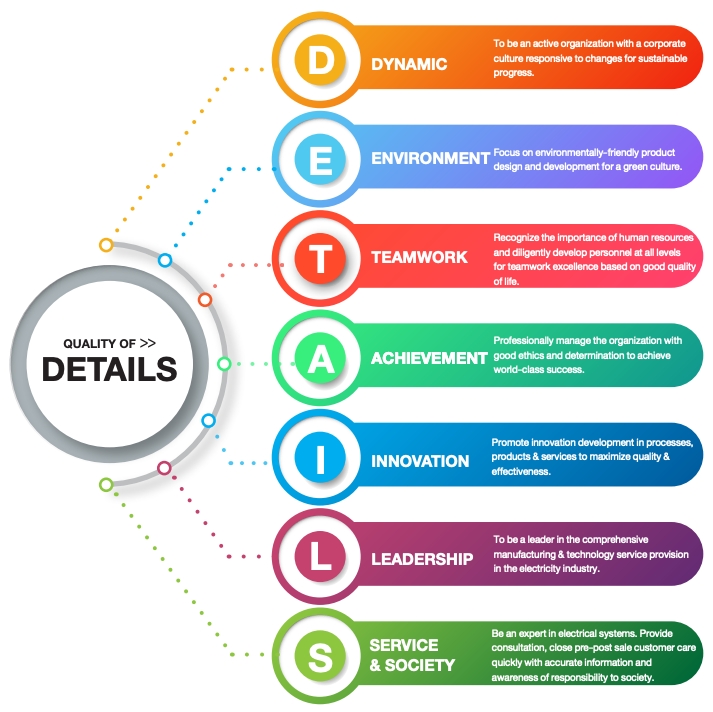
At QTC, sustainability is not just a goal—it’s a way of doing business with integrity, care, and long-term vision. Our Sustainability Framework integrates the company’s core value, “Quality of Details,” into every aspect of our operations, guided by the equation:
Q + R = S (Quality + Responsibility = Sustainability)
We believe that delivering excellence with attention to detail, combined with a deep sense of responsibility to all stakeholders, is the foundation for building a resilient and sustainable organization. This belief drives us to grow not only as a business, but as a responsible member of the global community.
Our framework is more than a management tool—it’s a mindset. It empowers every QTC employee to understand that:
“Doing good with quality and responsibility”
leads to trust, satisfaction, and long-term value for people, society, and the environment.
QTC is committed to balanced growth—standing side by side with communities and ecosystems—driven by the determination to leave a better world for future generations.
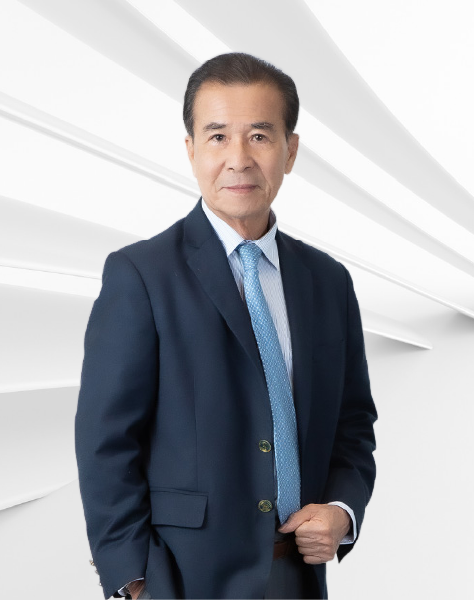
CHAIRMAN’S MESSAGE
“Throughout the years, QTC has consistently demonstrated its unwavering commitment and determination to develop the organization toward stable growth, while simultaneously creating shared value with society and the environment. This includes efforts to reduce greenhouse gas emissions in business processes, promote the use of renewable energy, manage resources efficiently, enhance labor potential and quality of life, ensure transparent and ethical corporate governance, and continuously support communities surrounding the factory. Moreover, QTC is dedicated to investing in clean energy businesses to foster stable and sustainable growth that is environmentally friendly.
“From its inception, QTC was founded with the intention of becoming a high-quality transformer manufacturer to meet the needs of Thailand’s energy industry. The company began as a small factory in Rayong Province and gradually grew into a nationally recognized organization specializing in clean energy technology and comprehensive energy solutions.
For over 30 years, QTC has adhered to the principle of “Quality + Responsibility = Sustainability,” which serves as the core of its sustainable development. This principle emphasizes environmental stewardship, social responsibility, and good governance alongside business growth.
We drive our business through innovation and a new generation of talent, developing technologies and services such as the Super Low Loss energy-saving transformer that helps reduce greenhouse gas emissions, and the Smart Transformer Monitoring System. We also invest in clean energy businesses while cultivating a corporate culture focused on sustainability, diversity, and human potential development. This is achieved through the nurturing of ‘good people’ and ‘capable people’ by instilling Green Culture and Safety Culture.
Looking ahead, QTC remains committed to creating energy solutions aligned with the circular economy, clean energy, and responsibility toward people and the planet — striving to become ‘Energy for a Sustainable Future’.”
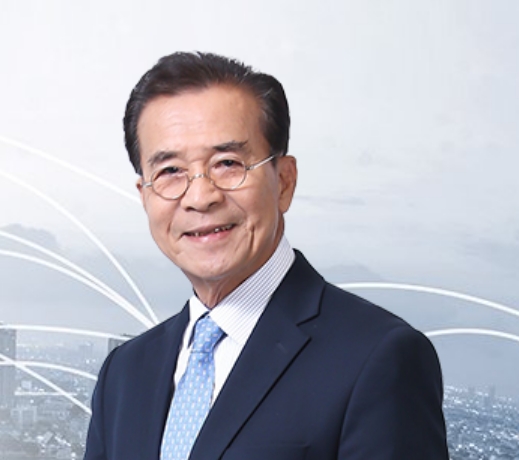
QTC SUSTAINABILITY FRAMEWORK
QTC & Sustainability
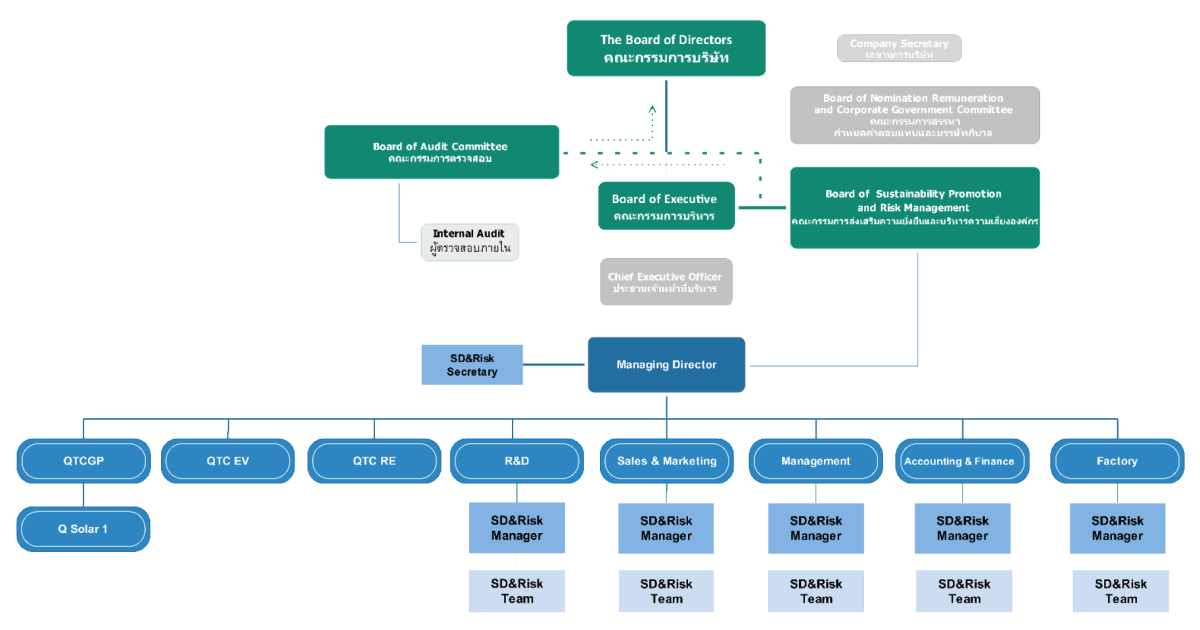
The Company has established the Corporate Sustainability Promotion Committee composed of department managers of various work sections. The Committee is authorized to monitor performance in line with policies and promote activities corresponding with the sustainable management framework and the sustainability equation, “Q+R=S”. Determining the sustainability management framework is an important mechanism for driving internal management at the policy level and the management level in order to lead to practice and project operations in line with the specified framework. The Company will foster beliefs and build understanding for every employee in line with the sustainability equation that doing good work with quality, accuracy and responsibility will build satisfaction for all stakeholders, build strength and sustainability for employees and the organization. The Company has the following sustainability framework and equation:
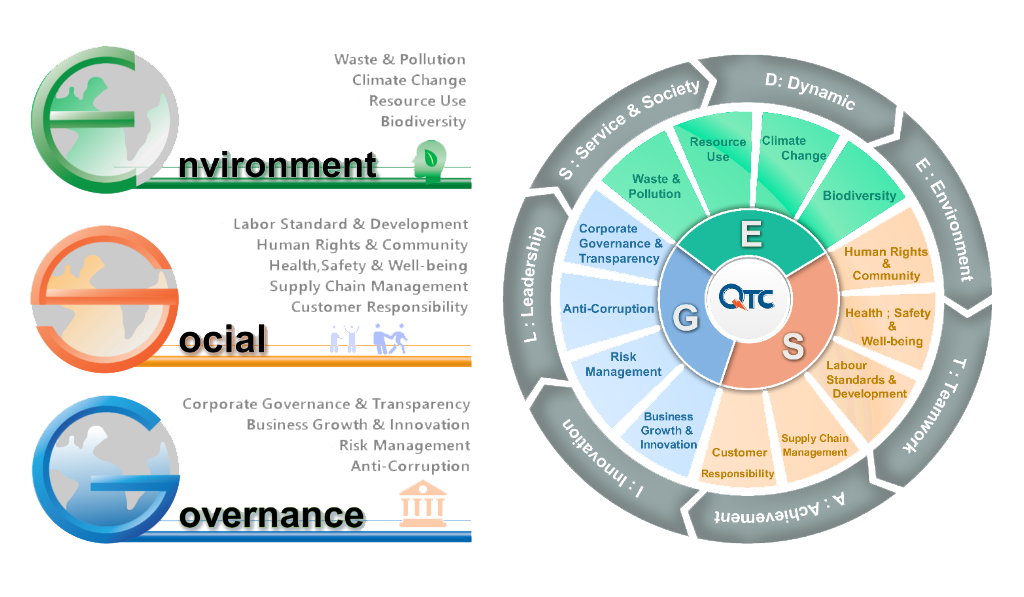
QTC Values for Sustainability
Operating Structure of the Sustainability Promotion Committee

Stakeholders of QTC
Stakeholder-related Procedures
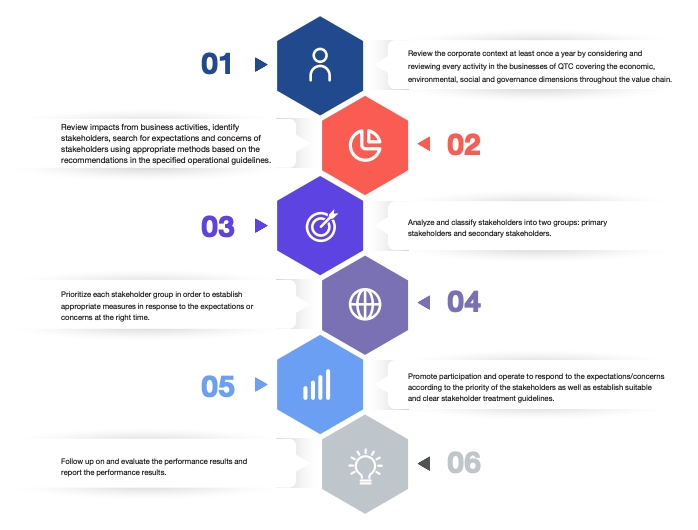
The Company has established practical guidelines related to stakeholders (QTC_HM_104) to be used as clear guidelines in operations. The procedures in brief are as follows:
The Corporate Sustainability Promotion Committee reviews the stakeholder-related operational guidelines once a year
or every time there is a change in the business activities from the usual. In 2024, QTC further considered the stakeholders
in the business of QTC EV, a new subsidiary that operates a business related to electric vehicles. From the review and
evaluation, there was an increase in new stakeholder groups. Meanwhile, the number of stakeholders in the existing groups
has increased along with the organization’s growth.
Material Topics
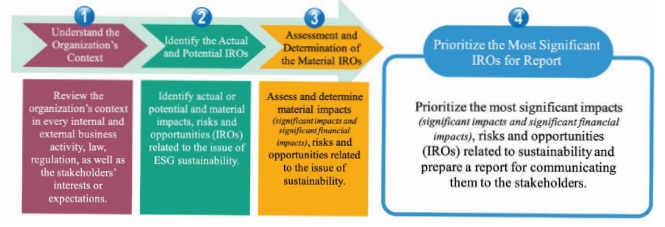
Double Materiality Assessment is a strategic approach used to identify sustainability issues that are significant both in terms of their impact on society and the environment (inside-out), and their financial implications for the organization (outside-in). This dual perspective enables companies to evaluate how their operations affect external stakeholders, while also understanding how external sustainability challenges—such as climate change or resource scarcity—could influence business performance. The process involves stakeholder mapping, ESG topic identification, risk and opportunity analysis, and prioritization of material issues for disclosure. Ultimately, it supports transparent reporting and informed decision-making for long-term resilience.
Determining material topics
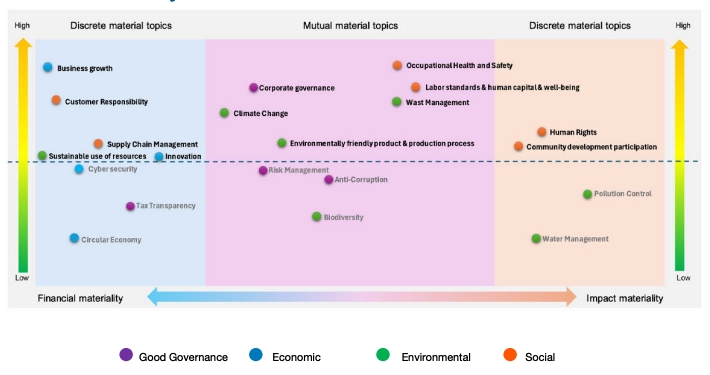
Double Materiality Matrix
Strategies for Sustainable Development
Through the Double Materiality Assessment approach, the company has identified key sustainability issues by evaluating both the impact the organization has on the environment and society (Inside-Out), and the financial implications of external sustainability factors on the organization (Outside-In). This assessment has led to the development of core sustainability strategies aligned with the company’s vision to become “World Class” and its culture of precision, “Quality of Details.” These strategies comprehensively address Environmental, Social, and Governance (ESG) dimensions through risk management, stakeholder engagement, and the establishment of measurable performance indicators. The strategies are cascaded across all levels of management and employees to foster shared understanding and active participation in driving sustainability goals forward—under QTC’s sustainability equation:
“Quality + Responsibility = Sustainability.”
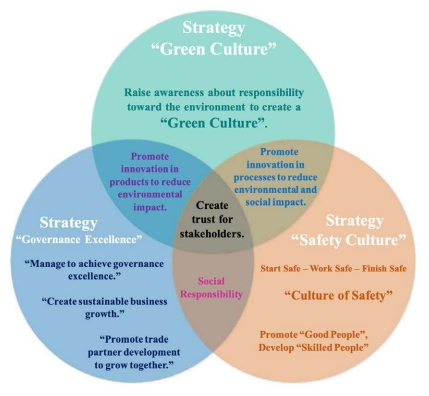
Risk Management as a Critical Mechanism for Business Operations
Risk management is a vital mechanism that organizations must prioritize in conducting business amidst rapid changes in the economy, technology, society, environment, and potential crises that may arise at any time. These external factors are often beyond control, and without proper preparedness, they can impact operations and hinder the organization’s ability to achieve its goals.
The company has adopted the ERM-COSO risk management framework as a systematic approach to assess and manage risks. This not only helps reduce the likelihood of damage but also creates opportunities for long-term sustainable development and growth.
QTC Energy Public Company Limited recognizes the importance of risk management across all dimensions—economic, environmental, social, and human rights. The company operates under the supervision of the Sustainability and Enterprise Risk Management Committee, the Audit Committee, and the Board of Directors to ensure alignment with the organization’s mission and vision of becoming a world-class company. This also helps build confidence among all stakeholders.
Award and Recognition
Our commitment to operating with responsibility and resilience in response to the energy transition while creating shared values to all stakeholders has earned us prestigious awards and global recognition.
VIEW ALL >>